

— SOURCING
This story started long before us.
Not sustainability. Relationship — with the trees, and with the people who have always known how to ask.
The Origin
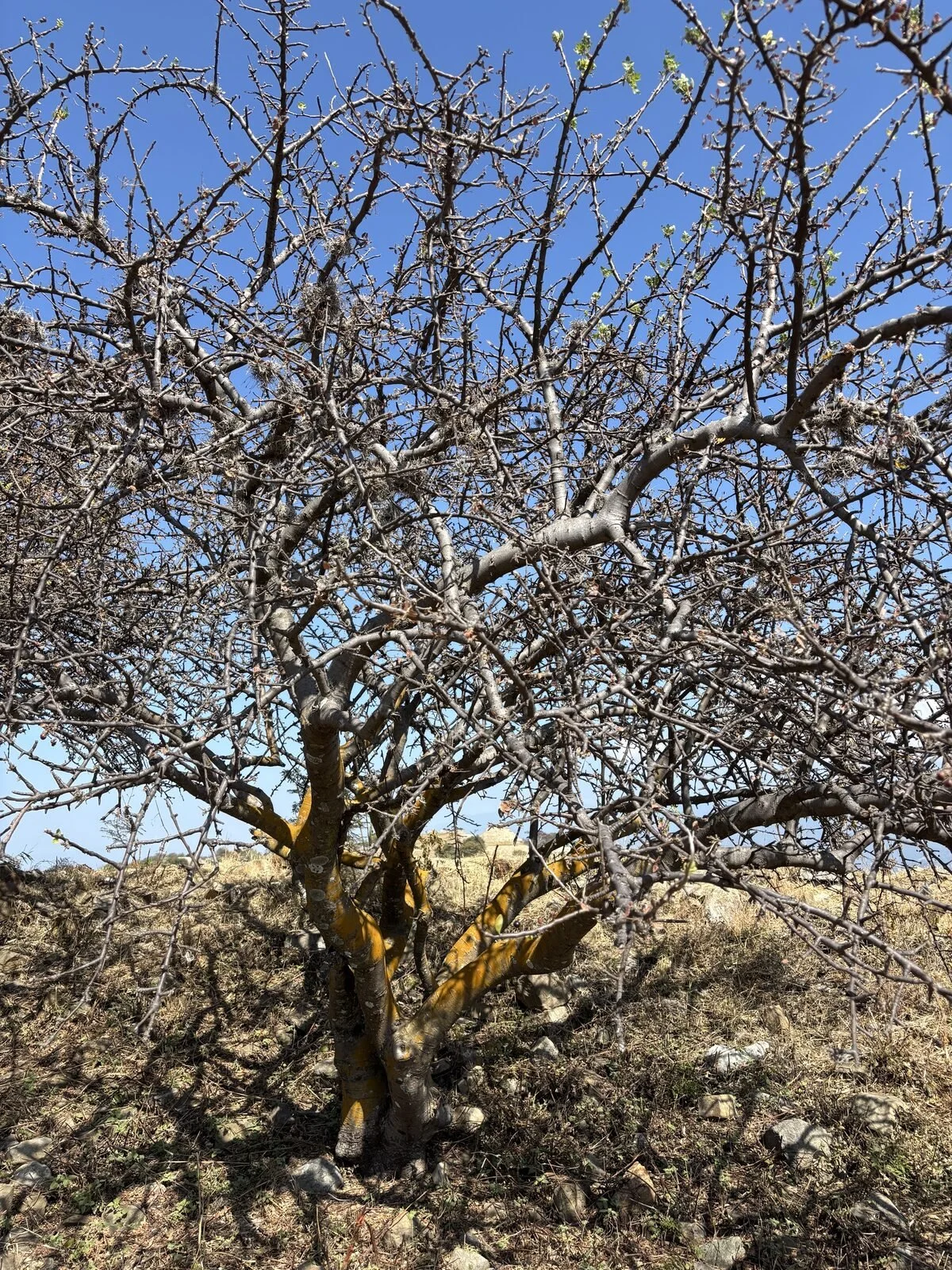
Copal comes from Mexico — not from one single place.
Over the years, we've worked with resin from different regions, because finding true copal, and the right relationships behind it, has never been about one region. It's about finding the people who still do this the right way, wherever they are.
The Harvest
This copal is wild harvest — it comes from trees the forest grew on its own, long before anyone came looking for them.
This isn't new. It's ancestral — hundreds of years old. What's changed over time is how people organize themselves to do it. The process itself hasn't.
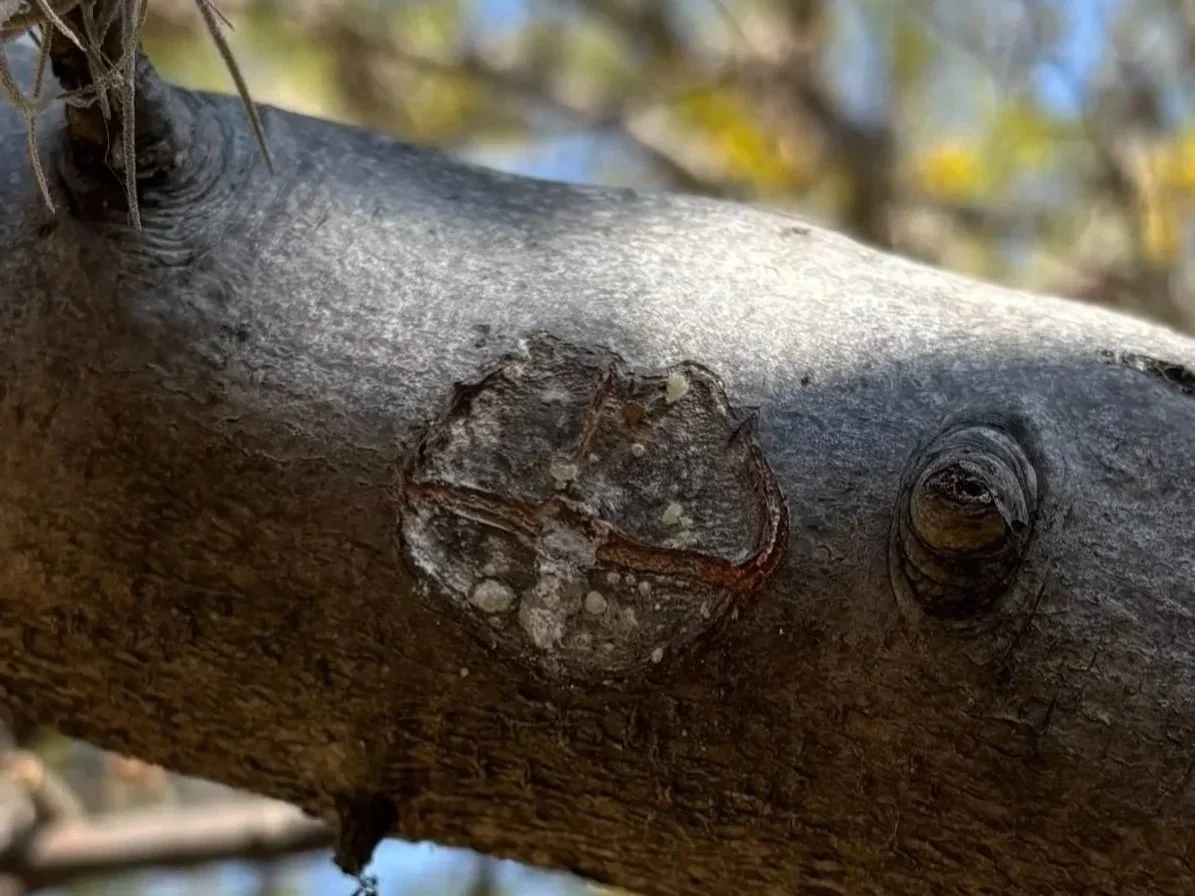
It isn't collected year-round. It happens once a year, for about three months, when the rains give the trees enough to spare. No tree is cut down. No forest is cleared. What's gathered is the resin the tree offers — a cut made by hand, small and precise, into bark that still has water in it to heal itself with.
Not every tree is asked twice in a row. A tree is usually given about two years to recover before it's harvested again — sometimes more, depending on its age and health. It's not a rule Temple Copal invented. It's how the people who do this work have always worked, because a tree that's never allowed to rest stops giving anything at all.
— THE TREES
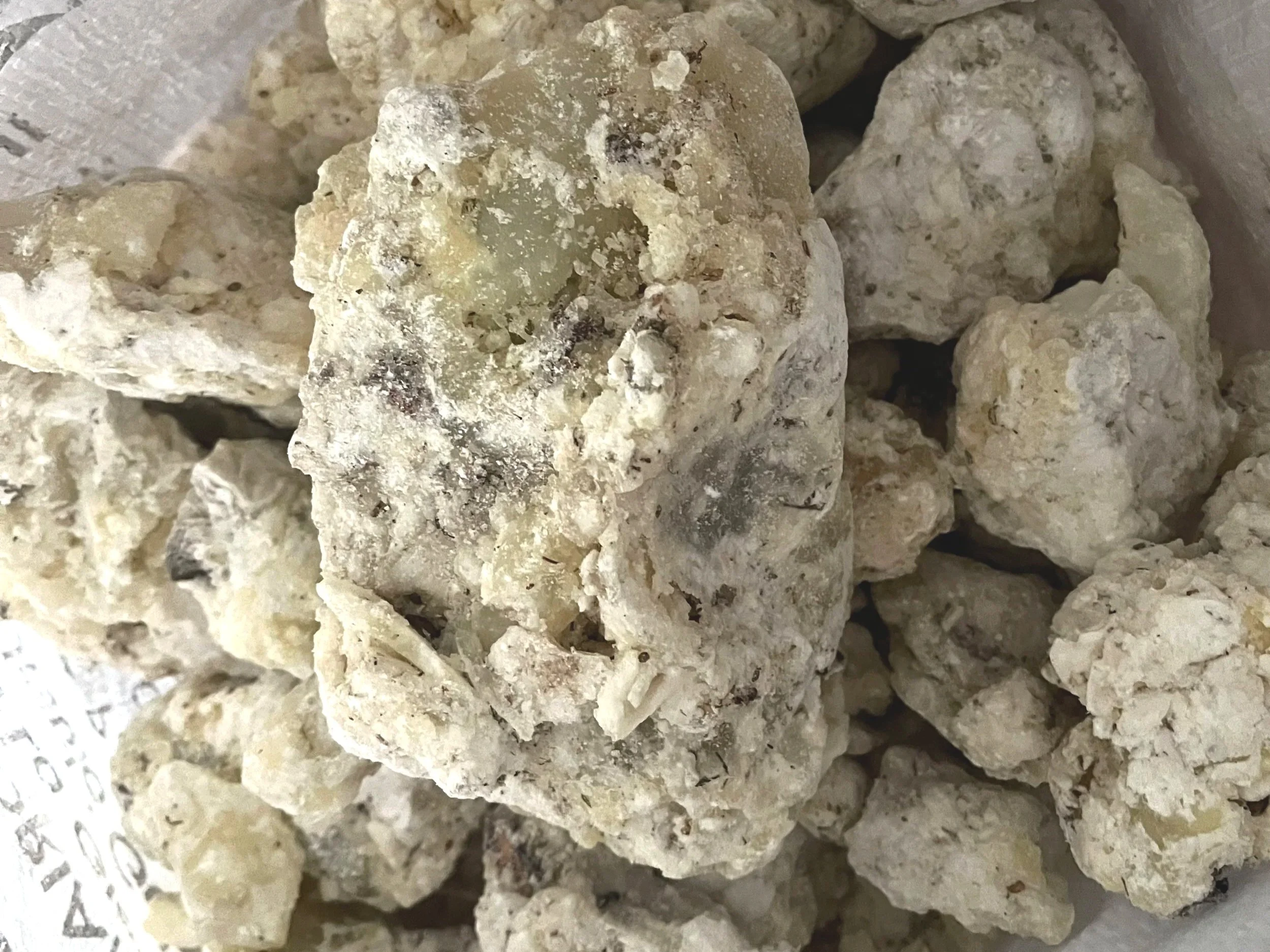
Temple Copal works primarily with two varieties — Bursera bipinnata and Bursera copallifera. They aren't separated when they're gathered — both collected together, the way they've always been.
What does vary is the resin itself.
White Copal
Comes from the cuts the harvesters make by hand — an intentional wound, tended with care.
Dark Copal
Comes from the forest itself — a storm, an insect, the age of the tree, time. Left exposed longer to sun and air, it darkens on its own.
The Harvesters
These are the hands behind every piece of copal.
Gathering the resin with patience, knowledge, and deep respect for the trees.
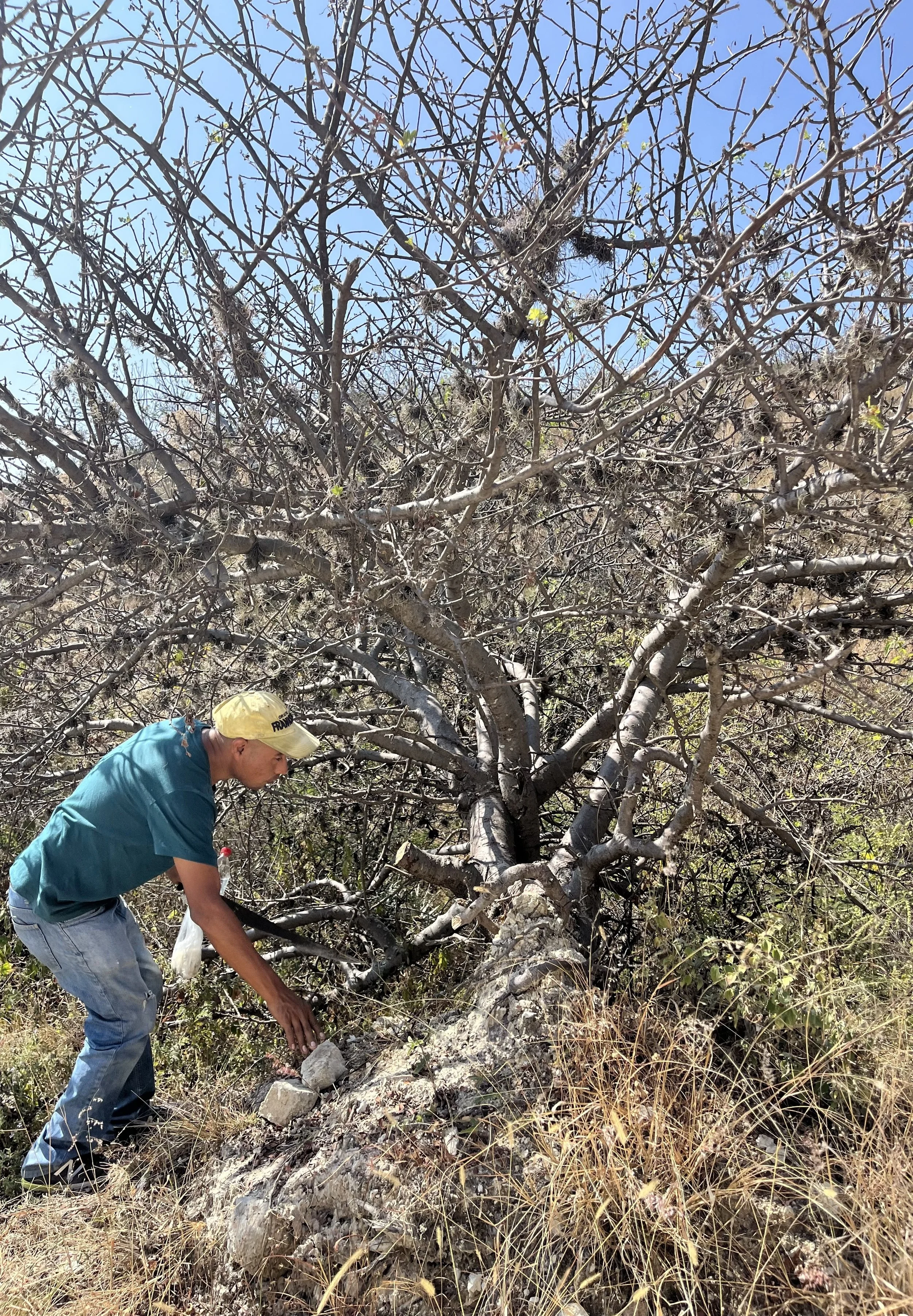
Copal is collected by indigenous and mestizo families alike, working side by side as part of the same cooperatives — where everything they gather comes together as one.
During the season, they live in the forest — weeks, sometimes months, with only what they can carry: basic tools, rationed food, something to cook with.
Fewer people want to do this work now. It asks a lot — the heat of the sun, the rain, sleeping close to the ground, months away from home. The ones who still do it are guardians of a living tradition, many of them elders, carrying something that's getting harder to pass on.
One is made by human hands. The other, by the forest's own weather.

— IN RECOGNITION
This story started long before us.
We're grateful — for this living tradition, for every hand that gathers this resin, and the sacrifice it takes. Without it, none of us — Temple Copal, or you, holding this copal today — would ever receive this blessing.