

Copal on Dia De Muertos
When I Was Small
The first time I went to the panteón (cemetery) on Día de Muertos was with my grandmother when I was small. Everything was bright. Candles everywhere, flowers everywhere, color filling a place I had always known as quiet.
We showed up to work. We washed the grave and we laid the flowers. That was our part.
We did not burn copal in those years. Other families did, and the smell crossed the cemetery and reached us anyway.
What stayed with me were the old women. They prayed out loud, in a high and piercing voice I had never heard before. It frightened me a little.
Years later I understood what they were doing. Each one was calling her own dead loved one, so they would know where to come.
The Smoke Is the Road
That is the work copal does in these days.
The smoke rises and it opens a way. The ones who are coming back can find the house, the altar, the people waiting for them.
The flowers give the color. The candles give the light. The copal gives the road.
On the Altar
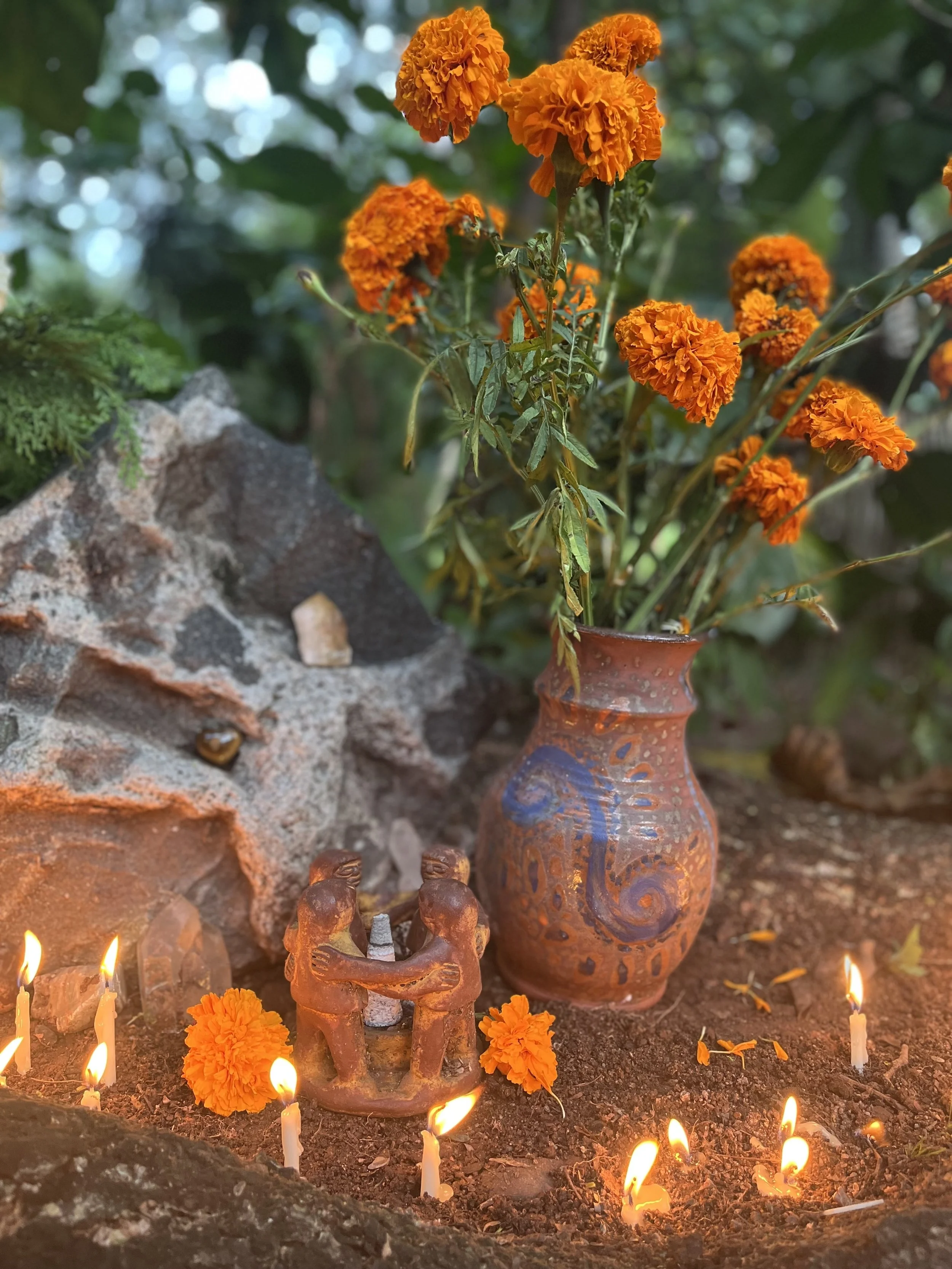
Water (for the thirst of a long walk), salt, bread, the food they loved, Cempasúchil (marigolds — the flower whose smell carries that far), photographs, and candles.
And the copalera, with its charcoal, holding the resin.
How We Keep It
Giovanna and I set the altar together. The photos, flowers, the food, each thing in its place.
Then we hold a fire ceremony, and the copal burns from the beginning of it to the end.
We use white copal, the same one we burn all year.
We remember our ancestors. We remember family and friends who went ahead of us.
None of this is complicated. You set a table for people you love, and you let them know you are waiting.
If This Is Not Your Tradition
You can still light it.
Think of someone who is gone. Say their name out loud. Let the smoke go up.
That is the whole thing. The dead do not ask for much.
The flowers will dry and the food will be eaten.
The smoke is the part that travels.